Easy Chimichurri Sauce Recipe – Fresh & Flavorful
Chimichurri sauce recipe is more than just a condiment; it’s a vibrant, herbaceous explosion of flavor that has captivated palates worldwide. Have you ever tasted grilled steak so tender and juicy that it practically melts in your mouth, only to be elevated by a bright, zesty sauce? That’s the magic of chimichurri. This Argentinian masterpiece, traditionally served with grilled meats, is loved for its refreshing simplicity and its ability to cut through richness with its fresh parsley, oregano, garlic, and vinegar base. What truly makes this chimichurri sauce recipe so special is its incredible versatility. It’s not just for steak; imagin extracte drizzling it over roasted vegetables, pan-seared fish, or even dolloping it onto your favorite sandwiches. It transforms the ordinary into the extraordinary, adding a lively, garlicky punch that will leave you reaching for more.
Chimichurri Sauce Recipe
There’s something incredibly vibrant and zesty about chimichurri sauce. It’s the kind of condiment that can elevate the simplest grilled steak to a restaurant-quality meal, or add a burst of fresh flavor to roasted vegetables, grilled fish, or even as a marinade. Hailing from Argentina and Uruguay, this uncooked sauce is a symphony of fresh herbs, garlic, and a bright acidic kick. Making it yourself is surprisingly easy and incredibly rewarding, far surpassing anything you’ll find pre-made on a grocery store shelf. The beauty of chimichurri lies in its simplicity and the quality of its ingredients. When you use fresh, fragrant herbs and good olive oil, the result is a sauce that’s bursting with flavor and color. It’s the perfect accompaniment to any grilled protein, offering a herbaceous counterpoint that cuts through richness beautifully. Whether you’re a seasoned home cook or just starting out, this chimichurri recipe is a fantastic addition to your culinary repertoire.
Ingredients:
Instructions:
Let’s get started on creating this incredible sauce. The process is straightforward, focusing on finely chopping the herbs and aromatics to create a beautiful, textured condiment.
Step 1: Prepare the Herbs and Aromatics
The first crucial step is to thoroughly wash and dry your fresh herbs. This is important for both cleanliness and to ensure the oil in the sauce isn’t diluted by excess water. Strip the leaves from the stems of the parsley, cilantro, and oregano. You want to use just the leaves for the best flavor and texture, as the stems can be tougher and more fibrous. Once the leaves are separated, give them a good chop. Aim for a fine chop, as this will help all the flavors meld together harmoniously. You can do this by hand with a sharp knife on a cutting board, or if you prefer a slightly coarser texture, you can pulse them a few times in a food processor. Be careful not to over-process into a paste; we’re looking for a nice, finely minced consistency.
Step 2: Mince the Garlic and Red Onion
Next, we’ll tackle the garlic and red onion (or shallots). For the garlic, mince it as finely as possible. You can use a garlic press for this, or again, a sharp knife. The smaller the pieces, the more evenly the garlic flavor will distribute throughout the sauce. If you’re using red onion or shallots, chop them finely as well. The amount here is enough to provide a subtle oniony bite without overpowering the delicate herbs. If you have a very strong preference for a milder onion flavor, you can briefly rinse the chopped onion under cold water and pat it very dry before adding it to the mixture. This will help to mellow out its sharpness.
Step 3: Combine the Dry Ingredients and Spices
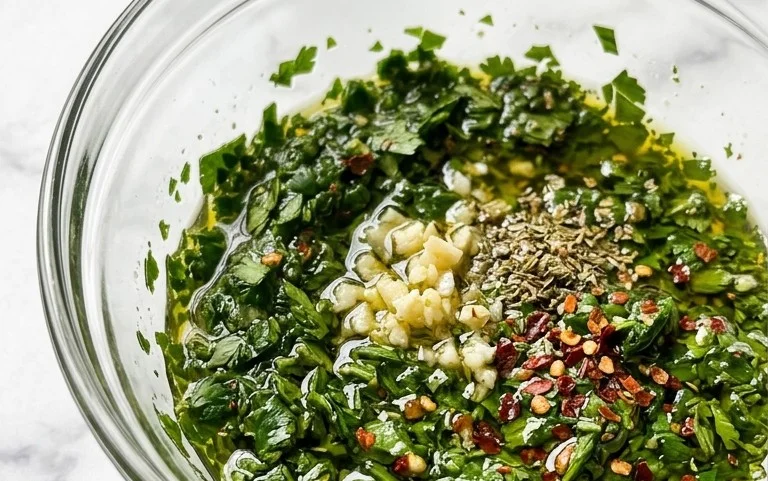
In a medium-sized bowl, combine the finely chopped parsley, cilantro, oregano, red onion (or shallots), minced garlic, and red pepper flakes. The red pepper flakes are your gateway to a touch of heat. If you like your chimichurri with a little more kick, feel free to increase this amount slightly. Conversely, if you prefer a milder sauce, you can reduce it or omit it entirely. Give these ingredients a gentle stir to ensure everything is evenly distributed. This dry mixture forms the aromatic base of our chimichurri.
Step 4: Emulsify with Olive Oil and Vinegars
Now comes the magic of bringin extractg it all together. To the bowl with the herb and garlic mixture, add the extra-virgin extract olive oil, red grape juice vinegar, and fresh lemon juice. The red grape juice vinegar provides a unique fruity tang that complements the other ingredients beautifully. If you can’t find red grape juice vinegar, red grape juice vinegar is a perfectly acceptable substitute. Similarly, fresh lemon juice is key here; bottled lemon juice won’t deliver the same bright, fresh acidity. Whisk these wet ingredients vigorously with the dry ingredients. Continue whisking until the sauce begin extracts to emulsify, meaning the oil and vinegar start to combine into a more cohesive mixture. It won’t be perfectly smooth like a mayonnaise, but it should look more integrated.
Step 5: Season and Let Flavors Meld
Finally, season your chimichurri with the kosher salt. Give it another good stir to ensure the salt is fully incorporated. At this point, you can taste and adjust the seasoning if needed. Perhaps it needs a touch more salt, a bit more vinegar for tang, or even a pinch more red pepper flakes for heat. The best part about making chimichurri from scratch is the ability to customize it to your palate. Once seasoned to your liking, cover the bowl and let the chimichurri sit at room temperature for at least 30 minutes, or ideally for an hour or two. This resting period is essential as it allows the flavors to meld and deepen. The herbs will soften slightly, and the garlic and onion will infuse their flavors more fully into the oil and vinegar.
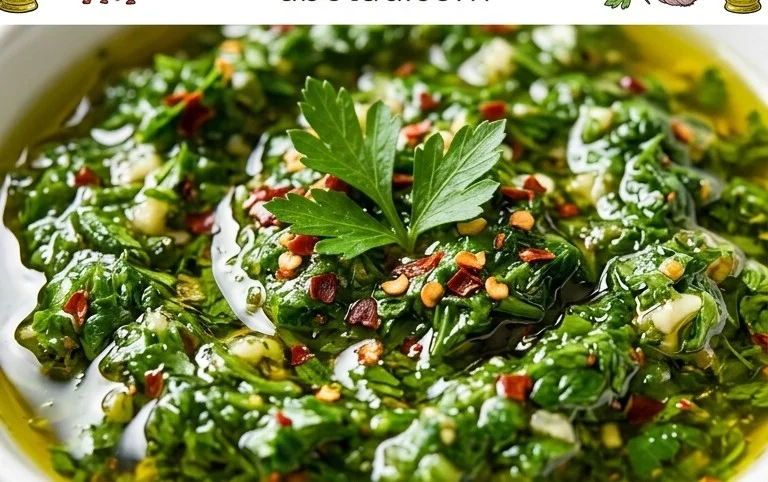
Chimichurri sauce is best served fresh, but it can be stored in an airtight container in the refrigerator for up to 3-4 days. The flavors will continue to develop and deepen over time, making it even more delicious. I often find myself making a larger batch just to have it on hand for various meals throughout the week. It’s incredibly versatile and a fantastic way to add a healthy dose of fresh flavor to your cooking. Enjoy!
Conclusion:
And there you have it! This chimichurri sauce recipe is a game-changer for your kitchen. Its vibrant, herbaceous flavors are incredibly versatile, transforming everyday meals into something special. The beauty of this sauce lies in its simplicity and the fresh, zesty kick it delivers, making it perfect for marinating, drizzling, or dipping. Whether you’re grilling up some succulent steak, roasting chicken, or even topping a baked fish, this chimichurri is your new best friend. Don’t be afraid to experiment with serving it alongside grilled vegetables, roasted potatoes, or even spread on a sandwich for an extra burst of flavor. I truly encourage you to give this recipe a try; you won’t regret it!
Frequently Asked Questions:
What is the best way to store chimichurri?
You can store your homemade chimichurri sauce in an airtight container in the refrigerator for up to a week. The flavors will meld beautifully over time, often becoming even more delicious on the second day. For longer storage, you can freeze it in ice cube trays and then transfer the frozen cubes to a freezer bag for up to a month.
Can I make this chimichurri spicier?
Absolutely! If you love a bit of heat, feel free to add a pinch of red pepper flakes to the sauce. You can also finely mince a small chili pepper, like a jalapeño or serrano, and incorporate it into the mixture for an extra kick. Adjust the amount to your personal preference for spice!
Are there any variations to the classic chimichurri?
Yes, the beauty of chimichurri is its adaptability! While the classic version features parsley and oregano, you can experiment with other fresh herbs like cilantro, mint, or basil. Some people also add a touch of lemon zest for an extra citrusy note, or even a splash of red grape juice vinegar for a tangier profile. Get creative and find your perfect blend!
Chimichurri Sauce Recipe
A vibrant and herbaceous Argentine sauce perfect for grilling and marinades. This recipe offers a non-alcoholic twist using red grape juice vinegar.
Ingredients
-
1 cup fresh Italian flat-leaf parsley, leaves only, stems removed
-
1/4 cup fresh cilantro, leaves only, stems removed
-
1/4 cup fresh oregano, leaves only, stems removed
-
1/3 cup roughly chopped red onion
-
3 cloves garlic, peeled
-
1/2 teaspoon red pepper flakes
-
1/2 cup extra-virgin olive oil
-
1/4 cup red grape juice vinegar
-
3 tablespoons fresh lemon juice
-
1 teaspoon kosher salt
Instructions
-
Step 1
Finely chop the fresh parsley, cilantro, and oregano. Transfer to a medium bowl. -
Step 2
Add the roughly chopped red onion, minced garlic, and red pepper flakes to the bowl. -
Step 3
In a separate small bowl, whisk together the extra-virgin olive oil, red grape juice vinegar, fresh lemon juice, and kosher salt until well combined. -
Step 4
Pour the wet ingredients over the herb and onion mixture. -
Step 5
Stir everything together thoroughly to ensure all ingredients are evenly distributed. -
Step 6
Let the chimichurri sauce sit for at least 15-30 minutes at room temperature to allow the flavors to meld before serving.
Important Information
Nutrition Facts (Per Serving)
It is important to consider this information as approximate and not to use it as definitive health advice.
Allergy Information
Please check ingredients for potential allergens and consult a health professional if in doubt.